Why public spending doesn’t become public value
The problem, the evidence, and three changes to budget execution worth testing.
A place to think together about Nigeria’s future. Less noise. More thought. Better ideas.
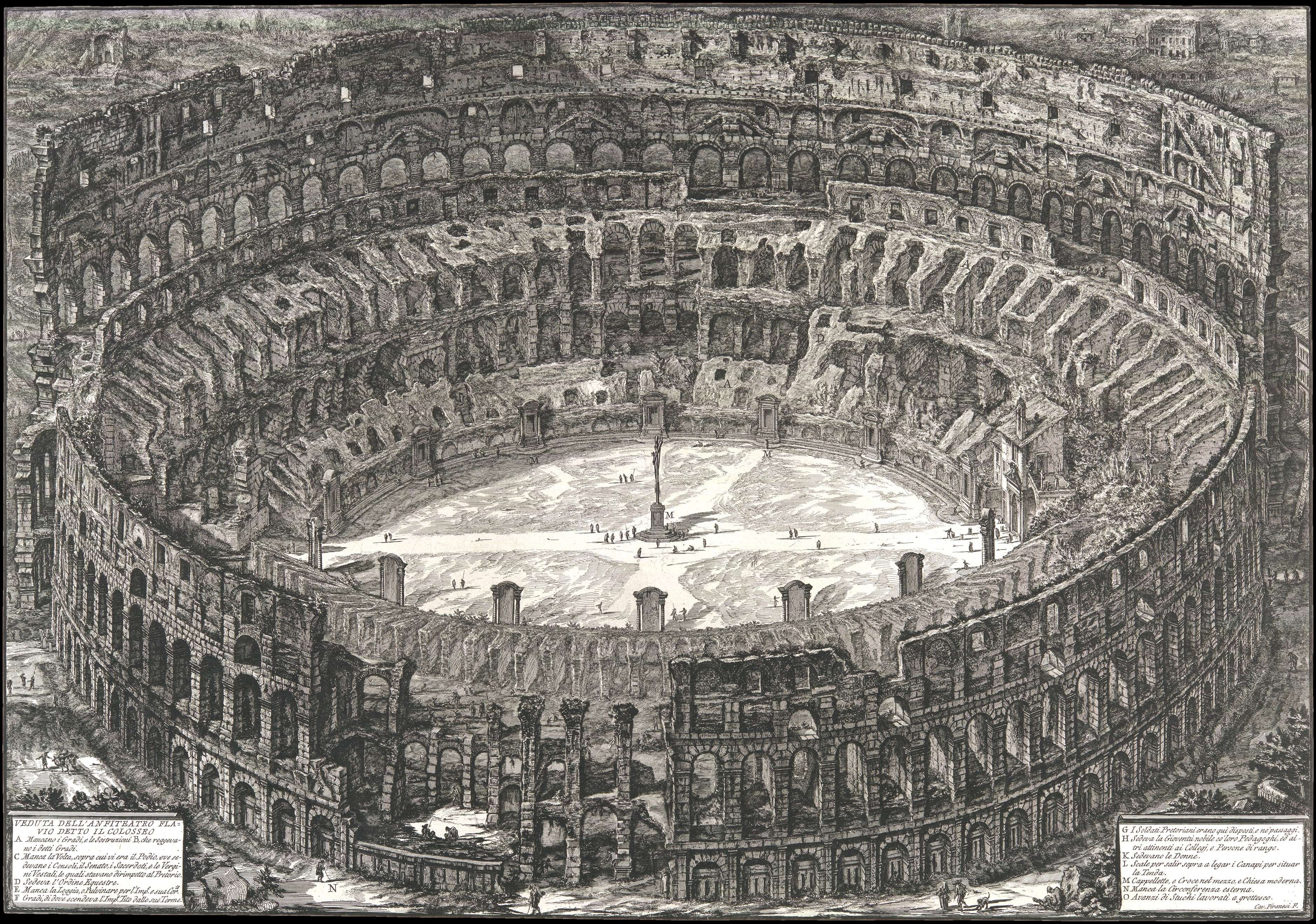
Giovanni Battista Piranesi, View of the Flavian Amphitheatre, c. 1757
Not another networking group. Not another talk shop. Conversations that go somewhere.
Nigeria has no shortage of opinions. Everyone has something to say about what is wrong. What we rarely do is bring people with different experience, expertise and perspectives into one room to seriously interrogate those problems, and work out what could be done differently.
That is the gap The Agora sets out to fill: an independent forum that meets regularly to think together, disagree intelligently and test ideas until they hold up.
No subject is off the table because it is uncomfortable or challenges conventional thinking. This is not a room of people who already agree. It is for people who question assumptions, bring unfamiliar perspectives and are honest enough to change their minds when they hear a better argument.
Every session should produce something: a recommendation, a brief, a clearer question. Imagining a better society can’t be left to politics and politicians alone.
And most importantly, what can we do about it?
Not just the loudest voices in the room. Every perspective at the table takes its turn, and the conversation builds from all of them.
once before anyone speaks twice.
The format is simple and the same each time: a question, a round of every voice, hard scrutiny, and a written answer.
One member frames the question and the evidence.
Each person responds in turn. Everyone speaks.
Assumptions questioned, positions tested, minds changed.
What should be done, by whom, and what we still don’t know.
Times are illustrative.
Short, actionable recommendations on one issue.
Deeper work when a question needs more than an evening.
A public record of the strongest arguments on each side.
Shared with institutions and policymakers where they can help.
Strong views are welcome. These six laws keep the conversation honest, generous and useful.
Restate the other view at its strongest before you argue against it.
The roundtable runs in turns, so quieter voices aren’t drowned out.
Be as hard on an argument as you like. Stay respectful to the person making it.
Say what you know, how you know it, and where you might be wrong.
Ideas can be shared outside; who said them can’t, unless they agree.
No session ends without a recommendation, a brief or a sharper question.
Lawyers, economists, academics, entrepreneurs, technologists, public servants, researchers, writers and policy professionals, alongside anyone else who is intellectually curious.
Professional titles and social status won’t decide who joins. Thoughtful contributors matter more than impressive résumés.
From the ancient Greek ἀγορά (agorá), meaning “gathering place”. Pronounced AG-uh-ruh.
In ancient Athens, the agora was the open square at the heart of the city. Citizens met there to trade, to argue and to decide how their city should be run. It belonged to no faction, and anyone with something to contribute had a place in it. That is the spirit this forum borrows.
Beholden to no government, party or commercial interest.
Nigeria needs more spaces where people can think together and develop solutions without partisan loyalty, personal ego or ideological conformity getting in the way. That only works if The Agora answers to no one but its members and the quality of its ideas.
The problem, the evidence, and three changes to budget execution worth testing.
The strongest arguments on each side, where people changed their minds, and what stayed unresolved.
A longer piece for a question that needed more than one evening.
No. It isn’t affiliated with any party, government or commercial interest, and it doesn’t campaign. Members will hold different political views, and that’s the point.
No. What matters is curiosity, serious engagement with your field and the ability to argue a point in good faith. Titles and status don’t decide who joins.
Not without your agreement. Ideas from a session can be written up and shared, but who said what stays in the room.
The organisers read every application in full and reply by email.
Yes. Members propose questions, and any topic is fair game if it matters to our collective future and can lead somewhere practical.
If you’re curious, open-minded and intellectually honest, tell us how you think. Every application is read in full.